Off-Grid Water at Home: What to Consider Before Building a DIY System
Off-Grid Water at Home: What to Consider Before Building a DIY System
Search for “off-grid water system,” and you will find everything from a rain barrel to elaborate tanks, pumps, filters, and treatment equipment. The problem is that copying somebody else’s setup without understanding your own needs can lead to wasted money—or a system that does not perform when you need it.
Before buying equipment, answer these questions.
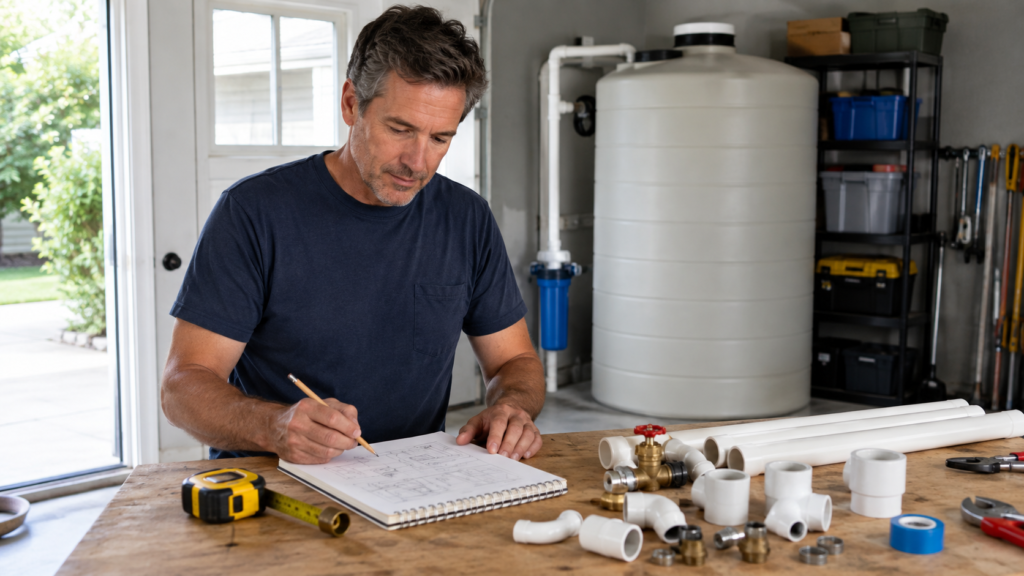
How Much Water Do You Actually Need?
Separate drinking and cooking needs from toilets, cleaning, gardening, and other non-potable uses. This prevents you from designing every gallon of storage to the same standard and helps you estimate capacity more realistically.
What Source Will Refill the System?
Possibilities may include rainfall, a well, delivered water, or another legally permitted source. Rainwater systems are highly location-dependent: rainfall patterns, roof catchment area, seasonal dry periods, and tank size all influence performance.
Where Will the Water Be Stored?
Large quantities of water are heavy. Storage location, structural support, freezing conditions, sunlight, overflow routing, and access for maintenance matter. Bigger is not automatically better.
Will You Need a Pump?
Gravity can simplify some systems, while others need pumping. If a pump is essential, electricity becomes another dependency. Think about outages before you finalize the design.
How Will Water Quality Be Managed?
The intended use determines the treatment requirement. Garden water and drinking water are not the same. Screens, first-flush arrangements, sediment filtration and other components may help with collection systems, but potable use requires appropriate treatment and compliance with health guidance.
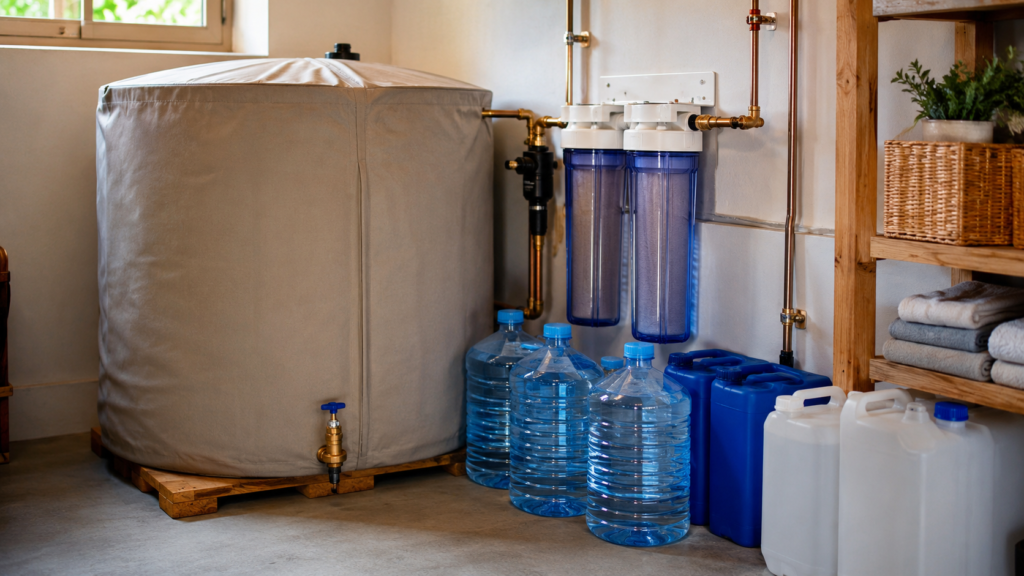
What Will Maintenance Look Like?
Any system that collects, stores, moves, or treats water needs inspection. Gutters get dirty, screens clog, tanks accumulate sediment, seals deteriorate, and filters require service. A system you cannot maintain easily may eventually become a system you stop using.
Should You DIY It?
DIY can make sense for people who enjoy hands-on projects and are willing to learn. But local building, plumbing, rainwater, well, and potable-water requirements still apply. For complicated installations, professional review can be worth the cost.
A good DIY guide should therefore do more than promise “free water.” It should help you think systematically about collection, storage, movement, use, maintenance, and limitations.
Disclosure: This article contains affiliate links. If you make a purchase through them, I may earn a small commission at no additional cost to you. I only recommend products I believe provide genuine value.