11 Beginner Woodworking Projects You Can Build With Basic Tools
Starting woodworking can feel intimidating when you see workshops packed with table saws, routers, planers, and expensive power tools.
The good news? You do not need a huge workshop to start woodworking.
Many of the best beginner woodworking projects can be completed with a relatively small collection of tools such as a drill, measuring tape, square, clamps, sandpaper, and an appropriate saw.
Beginner-focused woodworking resources commonly recommend smaller practical projects because they allow new woodworkers to learn core skills without committing to complicated furniture builds immediately.
And that is exactly where you should start.
What Makes a Good Beginner Woodworking Project?
Before picking your first project, look for four things:
- Relatively few individual pieces
- Straightforward measurements
- Simple joinery
- Affordable materials
Your first goal is not to build museum-quality furniture.
It is to move through the complete woodworking process successfully:
measure → cut → assemble → sand → finish
Once you can confidently do that, larger projects become much less intimidating.
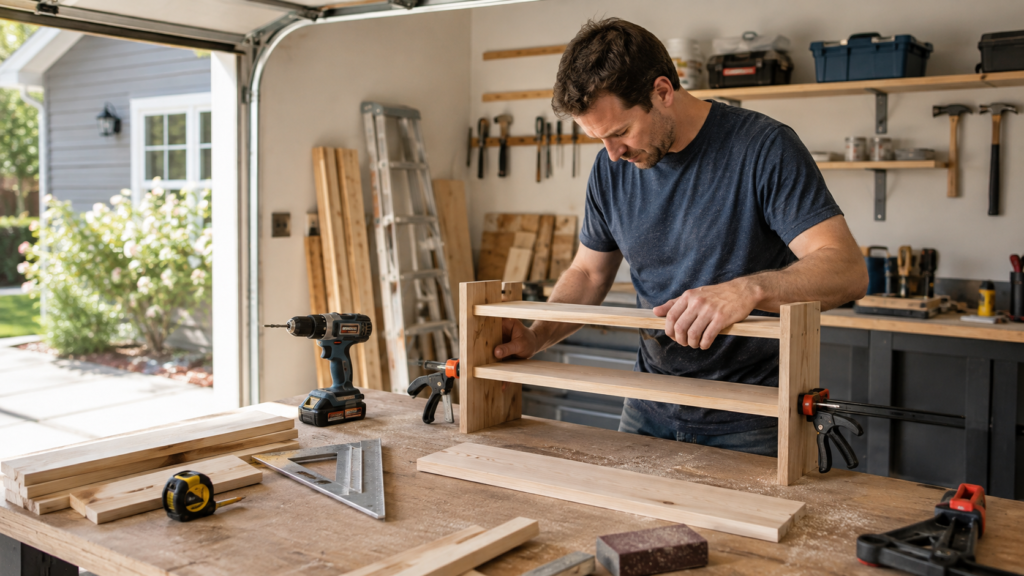
1. Simple Wall Shelf
A wall shelf is one of the easiest places to start.
It teaches:
- Measuring
- Cutting accurately
- Sanding
- Finishing
- Level installation
It is also useful enough that you are unlikely to feel like you are building something merely for practice.
Beginner difficulty: ★☆☆☆☆
2. Wooden Planter Box
A planter box is forgiving because tiny imperfections rarely ruin the finished project.
You can learn basic assembly while creating something practical for a patio, balcony, or backyard.
Skills learned: measuring, repeatable cuts, fastening, and outdoor finishing.
3. Wooden Serving Tray
A serving tray is another manageable weekend project.
It helps develop precision because the corners and edges are more visible than they might be on an outdoor project.
Try building a basic rectangular version before experimenting with decorative handles or complicated joinery.
4. Entryway Key Rack
Want something you can potentially finish quickly?
Build a small wall-mounted key rack.
These kinds of compact projects are useful for learning without having to purchase much lumber.
They are also easy to customize later with hooks, shelves, or different wood finishes.
5. Birdhouse
The classic beginner project still deserves a place on this list.
A birdhouse introduces several pieces that must fit together while keeping the overall build manageable.
It can help you practice:
- Following dimensions
- Cutting repeated parts
- Assembly order
- Basic exterior finishing
6. Small Step Stool
A stool introduces something important:
Unlike a decorative shelf, it must support weight appropriately.
That means measurements, fasteners, material selection, and stability become more important.
For that reason, use a properly designed plan and understand the load requirements rather than improvising a weight-bearing design.
7. Raised Garden Bed
Once you feel comfortable making smaller projects, a raised garden bed is an excellent introduction to working at a larger scale.
The joinery can remain relatively simple while teaching you how to keep a larger rectangular structure square.
8. Basic Bookshelf
A bookshelf is where accurate measurements start becoming noticeably more important.
If one side is slightly longer than the other, or your shelves are inconsistent, the finished piece can quickly look uneven.
A clear plan is particularly helpful here.
9. Outdoor Bench
An outdoor bench combines practical woodworking with basic furniture construction.
Pay attention to:
- Structural stability
- Appropriate lumber
- Fastener selection
- Outdoor finishes
- Comfortable dimensions
This is a good project after completing several smaller builds.
10. Simple Coffee Table
A coffee table can be your introduction to furniture that people will actually notice inside your home.
The project encourages you to improve:
- Squareness
- Sanding
- Surface preparation
- Alignment
- Finishing
11. Wooden Storage Chest
A storage chest pushes your skills another step further because you may need to work with panels, hinges, and a lid.
It is a good transitional project before attempting more complicated cabinets or furniture.
The Biggest Beginner Woodworking Mistake
One of the easiest ways to waste lumber is to begin cutting before understanding the entire project.
Before making the first cut, check:
- Finished dimensions
- Materials list
- Cut list
- Required tools
- Joinery
- Assembly sequence
- Finishing steps
DIY woodworking involves multiple constraints—including available material, skill level, and effort—so planning becomes particularly important for casual builders.
Want More Projects to Choose From?
Instead of searching for a different plan every time you want to build something, TedsWoodworking markets a large collection of woodworking project plans across many project types.
If you’re the kind of person who enjoys browsing project ideas and having plans available when inspiration strikes, it may be worth checking out.
Affiliate disclosure:
This page may contain affiliate links. If you purchase through one of these links, we may earn a commission at no additional cost to you.
How to Choose Your First Woodworking Project
Use this simple rule:
Build something you actually need.
Want plants on your patio?
Build the planter.
Need somewhere to put your keys?
Build the rack.
Need garage storage?
Build shelves.
A useful project gives you more motivation to finish it.
Match the Project to Your Tools
Before choosing a plan, look through the required tool list.
If the project requires several specialty tools you do not own, the apparent low-cost DIY project can suddenly become expensive.
Match It to Your Skill Level
A project containing complex joinery isn’t necessarily bad.
It simply may not be the best first project.
Starting with manageable builds and progressing gradually is a recurring theme in beginner woodworking resources.
Do You Need Woodworking Plans?
Not necessarily.
Experienced builders frequently design their own projects.
But beginners often benefit from plans because a well-designed plan can answer questions before the lumber is cut.
Look for:
- Finished dimensions
- Material list
- Cut list
- Diagrams
- Assembly sequence
- Hardware requirements
- Tool requirements
More plans does not automatically mean better plans.
Evaluate any woodworking plan library based on whether its plans are clear enough for your skill level and relevant to the projects you actually want to build.
Beginner Woodworking FAQ
What is the easiest woodworking project for a beginner?
A small shelf, planter box, key rack or serving tray is usually easier than furniture requiring complicated joinery.
Can I start woodworking without a table saw?
Yes. Numerous beginner projects can be completed without owning a professional-sized workshop or table saw; the exact tools depend on the project. Beginner project resources regularly feature builds requiring relatively modest tool sets.
What woodworking tools should a beginner buy first?
Your project determines the exact list, but measuring tools, a square, drill/driver, clamps, sanding equipment and an appropriate cutting tool cover many basic tasks.
Should beginners use woodworking plans?
Plans can be especially useful for beginners because they provide dimensions and an intended construction sequence.
What should I build first?
Choose a small project that you genuinely need and can complete with the tools you already own.
Ready to Pick Your Next Project?
You do not need to become an expert before building something useful.
Start small.
Finish one project.
Learn what went wrong.
Then build something slightly more ambitious.
If having a large collection of project ideas appeals to you, you can review TedsWoodworking and decide whether its plan library fits the kind of projects you want to make.