Beginner Woodworking Projects You Can Build With Basic Tools
You don’t need a garage full of expensive machinery to start woodworking.
In fact, some of the best beginner woodworking projects are small, useful builds that teach you the fundamentals without requiring advanced equipment or complicated joinery.
A simple shelf can teach accurate measuring. A planter box helps you practice repeated cuts and assembly. A coffee table introduces you to furniture construction without jumping straight into cabinets or complex joinery.
The trick is choosing a project that matches your tools, available time, and current skill level.
Here are 11 woodworking projects that make sense for beginners—and what each one can teach you.
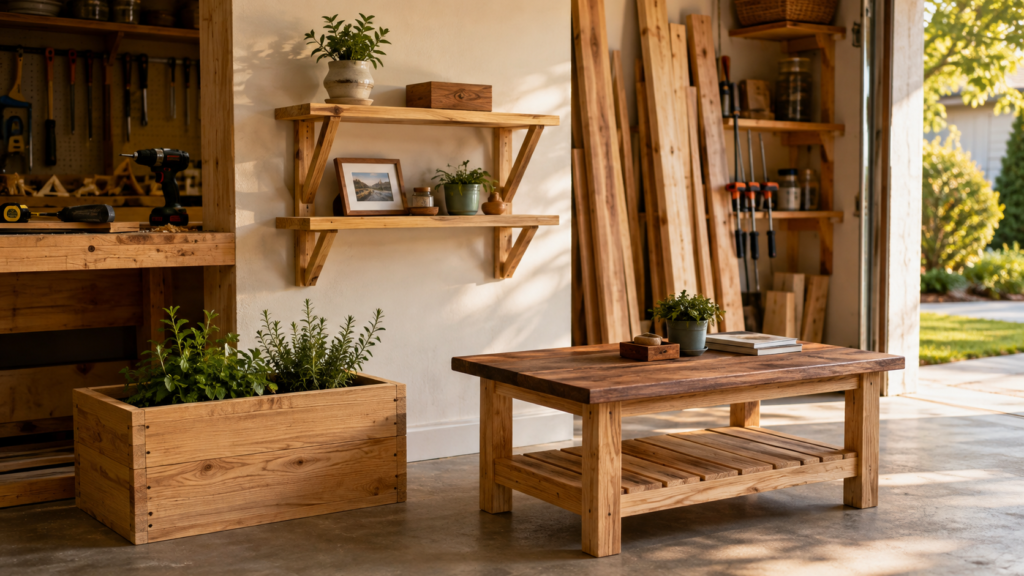
Quick Comparison: Which Project Should You Build First?
| Project | Difficulty | Typical Time | Good For Learning |
|---|---|---|---|
| Wall Shelf | Easy | 1–3 hrs | Measuring and leveling |
| Planter Box | Easy | 2–4 hrs | Repeated cuts |
| Key Rack | Very Easy | 1–2 hrs | Basic assembly |
| Serving Tray | Easy | 2–3 hrs | Sanding and finishing |
| Birdhouse | Easy | 2–4 hrs | Following dimensions |
| Raised Garden Bed | Easy | 3–6 hrs | Larger assemblies |
| Bookshelf | Moderate | 4–8 hrs | Squareness |
| Step Stool | Moderate | 3–5 hrs | Structural construction |
| Outdoor Bench | Moderate | 5–8 hrs | Furniture building |
| Coffee Table | Moderate | Weekend | Precision and finishing |
| Storage Chest | Moderate | Weekend | Panels and hardware |
Times vary depending on the design, tools, finish, and your experience.
1. Simple Wall Shelf
Difficulty: Easy
Best for learning: Measuring, cutting, sanding and installation
Typical tools: Drill, saw, measuring tape, square, sander or sandpaper
A basic wall shelf is one of the best first woodworking projects because it teaches several essential skills without using much material.
You’ll need to measure accurately, make straight cuts, smooth the wood, and install the finished shelf level.
The project is also practical. Instead of making something purely for practice, you end up with storage or display space you can actually use.
Beginner tip
Keep the first version simple. A straightforward shelf with basic supports is better for learning than attempting decorative joinery immediately.
2. Wooden Planter Box
Difficulty: Easy
Best for learning: Repeated cuts and assembly
Typical tools: Saw, drill, tape measure, square
A planter box is especially forgiving for new woodworkers.
Minor cosmetic imperfections usually don’t stop the finished project from being useful, particularly if it will live outdoors.
The repeating side pieces also give you practice making multiple cuts to the same dimension.
If you have a patio, balcony, or backyard, this is one of those beginner DIY wood projects you may actually use for years.
3. Entryway Key Rack
Difficulty: Very easy
Best for learning: Layout and hardware installation
Typical tools: Drill, saw, measuring tape
Want a project you could potentially complete in one afternoon?
Build a wooden key rack.
It requires very little lumber and gives you practice laying out hooks evenly and mounting a finished piece securely to a wall.
Later, you can make a more advanced version with a mail shelf or small storage compartment.
4. Wooden Serving Tray
Difficulty: Easy
Best for learning: Clean assembly and finishing
Typical tools: Saw, drill, clamps, sandpaper
A serving tray is small enough to be manageable but visible enough that good finishing matters.
That makes it useful for practicing:
- Smooth sanding
- Even edges
- Clean joints
- Stain or protective finishes
Because the project uses relatively little material, experimenting doesn’t feel as risky as it would on a large piece of furniture.
5. Birdhouse
Difficulty: Easy
Best for learning: Reading plans and matching components
Typical tools: Saw, drill, measuring tools
The birdhouse became a classic beginner woodworking project for a reason.
Several individually cut pieces need to fit together correctly, but the overall project remains small enough to understand.
It encourages you to pay attention to dimensions instead of simply eyeballing everything.
If you plan to make one for actual birds rather than decoration, use dimensions and materials appropriate for the species you hope to attract.
Not Sure What You Want to Build Next?
Once you finish a couple of beginner projects, the bigger challenge often becomes finding the next project that matches your tools and skill level.
TedsWoodworking markets a large collection of woodworking plans covering furniture, outdoor projects, storage, workshop ideas and many other project types.
If having a broad library of ideas available in one place sounds useful, you can review the current package and decide whether the plans suit the way you like to build.
6. Raised Garden Bed
Difficulty: Easy
Best for learning: Building larger square assemblies
Typical tools: Saw, drill, square, measuring tape
A raised garden bed is a good step up from small tabletop projects.
You’re still dealing with relatively simple construction, but the larger dimensions make alignment more important.
This gives you useful practice checking diagonals, keeping corners square and working with longer pieces of lumber.
7. Basic Bookshelf
Difficulty: Moderate
Best for learning: Squareness and repeatable measurements
Typical tools: Saw, drill, square, clamps
A bookshelf introduces an important woodworking lesson:
Small measurement errors become much more noticeable as a project gets larger.
If shelves aren’t aligned or the two sides differ slightly in length, the finished project may look crooked.
This is where a clear woodworking plan becomes particularly useful because you need to understand the relationship between all the pieces before cutting.
8. Small Step Stool
Difficulty: Moderate
Best for learning: Structural thinking
Typical tools: Saw, drill, square, clamps
A step stool looks simple, but it introduces a new consideration:
The project needs to safely support weight.
That means this isn’t the best project to improvise without understanding the design.
Use a properly designed plan, appropriate materials, and secure joinery for anything intended to carry a person’s weight.
9. Outdoor Bench
Difficulty: Moderate
Best for learning: Basic furniture construction
Typical tools: Saw, drill, measuring tools, sander
An outdoor bench is a satisfying transition into larger furniture.
You’ll start thinking about:
- Stability
- Seat height
- Structural support
- Outdoor fasteners
- Weather-resistant finishing
Because it lives outside, minor cosmetic imperfections may also feel less intimidating than they would on your first indoor furniture piece.
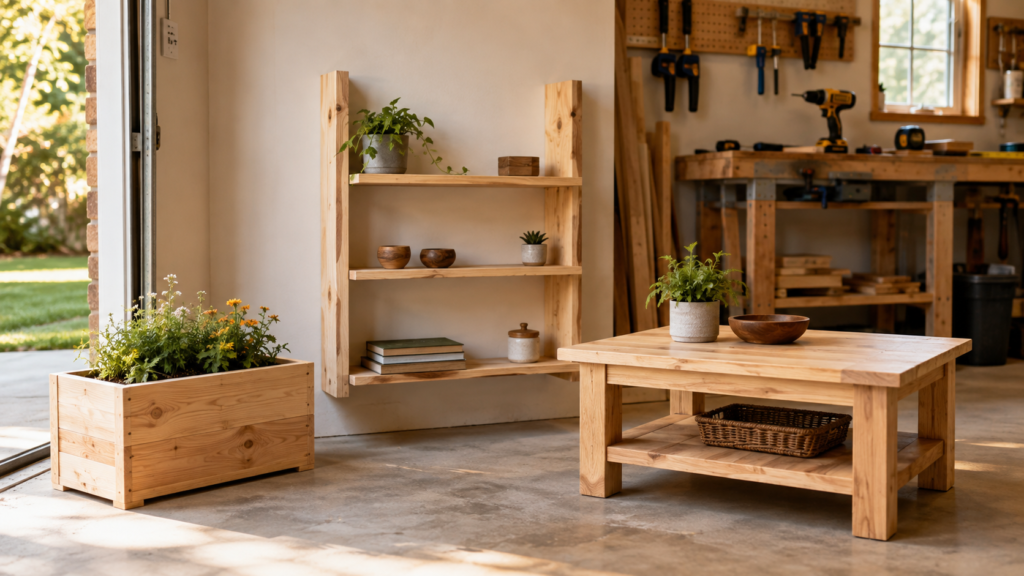
10. Simple Coffee Table
Difficulty: Moderate
Best for learning: Furniture precision and finishing
Typical tools: Saw, drill, square, clamps, sander
A coffee table is a great milestone project.
Unlike an outdoor planter or garage shelf, it will probably sit somewhere highly visible in your home.
That encourages you to pay closer attention to:
- Alignment
- Surface preparation
- Sanding
- Edge quality
- Finish consistency
Don’t rush the finishing stage. A simple design with a clean finish can look much better than a complicated design assembled poorly.
11. Wooden Storage Chest
Difficulty: Moderate
Best for learning: Panels, lids and hardware
Typical tools: Saw, drill, clamps, square
A storage chest introduces another layer of woodworking because you may need to align a lid and install hinges.
It can also be customized for different uses:
- Blanket storage
- Toy storage
- Entryway storage
- Garage organization
- Workshop storage
If you can confidently complete a storage chest, you’ll have practiced many of the skills needed for more advanced furniture projects.
What Tools Do You Actually Need to Start Woodworking?
Seeing a professional workshop online can make woodworking look extremely expensive.
It doesn’t have to start that way.
Beginner woodworking resources continue to emphasize that useful projects can be made without a full professional shop, and basic hand tools remain central to getting started.
For many simple projects, your starter kit might include:
- Measuring tape
- Carpenter square
- Pencil
- Drill/driver
- Appropriate saw
- Clamps
- Sandpaper or orbital sander
- Safety glasses
- Hearing protection when appropriate
You can add specialty tools when a project actually requires them.
Don’t buy every tool first
A better approach is:
Choose a project → identify the tools required → buy or borrow what is genuinely necessary.
That helps prevent spending hundreds or thousands of dollars before you even know whether woodworking is a hobby you want to pursue seriously.
What Makes a Good Beginner Woodworking Plan?
This matters more than the sheer number of plans you can access.
A useful beginner woodworking plan should ideally tell you:
Finished dimensions
You need to know whether the finished piece will fit the intended space.
Material requirements
Look for lumber, hardware, fasteners and finishing supplies.
Cut dimensions
You shouldn’t have to reverse-engineer every measurement from a picture.
Required tools
Know before beginning whether the project expects equipment you don’t own.
Assembly sequence
The plan should help you understand which pieces go together and in what order.
Skill level
A project advertised to beginners shouldn’t unexpectedly depend on advanced joinery without explanation.
WOOD Magazine, for example, maintains dedicated project-plan libraries spanning cabinets, desks, bookshelves, tables and other builds, reinforcing how central clear plans are to woodworking content.
The Mistake That Wastes the Most Lumber
One of the easiest beginner mistakes is becoming excited about a project and immediately starting to cut.
Before touching the saw, read through the entire plan.
Ask yourself:
- What am I building?
- How large will it be?
- What materials do I need?
- Which cuts repeat?
- What joins the pieces together?
- What order should they be assembled?
- Is there anything I don’t understand?
Then measure.
Then cut.
That five-minute review can prevent a project from turning into a pile of incorrectly sized lumber.
Free Plans vs. Large Woodworking Plan Libraries
There are plenty of free woodworking plans available online. WOOD Magazine currently maintains a sizable free-plan section, and many established woodworking publishers offer beginner project ideas.
So why would someone pay for a woodworking-plan collection?
Mostly for convenience and variety.
A larger library may appeal to someone who:
- Builds frequently
- Likes browsing project ideas
- Wants different project categories in one place
- Doesn’t want to search multiple websites every weekend
On the other hand, someone who only wants to build one shelf may be perfectly happy using a free plan.
The right question isn’t:
“Which collection has the biggest number?”
It’s:
“Does this source contain clear plans for projects I actually want to build?”
Want More Woodworking Projects to Choose From?
If one of these beginner woodworking projects has you thinking about what you could build next, you can take a look at the current TedsWoodworking collection.
The appeal is the variety: instead of looking for individual project ideas across different websites, you can browse a larger collection and see whether it contains projects that fit your interests and experience level.
Before buying, review the current offer, available samples and terms to make sure it matches what you want.
Frequently Asked Questions
What are the easiest beginner woodworking projects?
Simple shelves, planter boxes, key racks, serving trays and similar small projects are generally good starting points because they use relatively few components and teach fundamental skills. Established DIY publishers continue to feature these kinds of quick, simple projects specifically for beginner woodworkers.
Can I start woodworking without a full workshop?
Yes. Many beginner projects are specifically designed for people who don’t have a full workshop.
Do I need a table saw to start woodworking?
Not necessarily. The exact cutting tool depends on your project. Beginners can work with different combinations of hand saws, circular saws, jigsaws or other appropriate tools depending on what they’re building.
What woodworking project should I build first?
Start with something small that you actually need. A shelf, planter or key rack gives you a useful finished object while teaching basic techniques.
Should beginners use woodworking plans?
A good plan can reduce uncertainty by giving you measurements, materials and an intended assembly process. It’s especially useful when you’re still learning how separate components fit together.
Are free woodworking plans good enough?
They can be. Reputable woodworking publications provide free project plans, so paying for plans isn’t essential. A paid collection is mainly worth considering when its organization, variety or convenience adds enough value for you.
Your First Project Doesn’t Need to Be Impressive
It needs to be finished.
Build the shelf.
Make the planter.
Discover that one corner isn’t perfect.
Figure out why.
Then make the next project better.
That’s how woodworking skills accumulate.
And once you stop worrying about making your first project perfect, woodworking becomes a lot more enjoyable.