How to Build a More Resilient Home Water Supply: 7 Practical Steps
Some links in this post are affiliate links. If you buy through them, I may earn a small commission at no extra cost to you — it helps keep these guides free. I only point to things I’d genuinely consider using myself.
Most households rarely think about water until the tap stops working. A temporary outage, severe weather, pump failure, contamination notice, or extended emergency can quickly turn a basic necessity into the most important item in the house.
The good news is that water preparedness does not have to begin with an expensive off-grid installation. A better approach is to build resilience in layers: store some water, reduce unnecessary consumption, understand possible collection sources, and have a plan for treating water when necessary.
1. Start With Emergency Storage
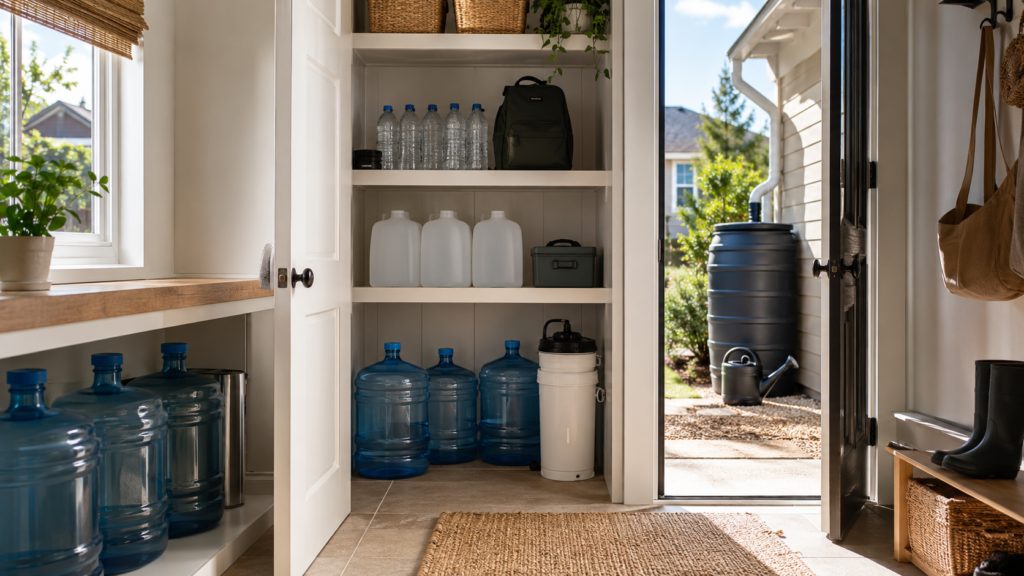
Stored potable water is the simplest backup. Use clean, food-grade containers and follow the storage and replacement guidance of your local public-health authority. Keep containers in a cool location away from chemicals and direct sunlight.
The objective is not necessarily to store months of water. It is to create enough breathing room that a short interruption does not immediately become a crisis.
2. Find Out Where Your Water Actually Comes From
Municipal water, a private well, and hauled water each have different vulnerabilities. A well may depend on electricity to operate its pump. Municipal systems can experience localized outages or boil-water advisories. Understanding your weak point makes preparedness much more useful.
3. Reduce the Water You Waste
Fixing leaks, installing efficient fixtures, running full laundry loads, and using water more intentionally can reduce demand. Conservation becomes even more important when the amount of available water is limited.
4. Explore Rainwater Collection Where It Is Appropriate
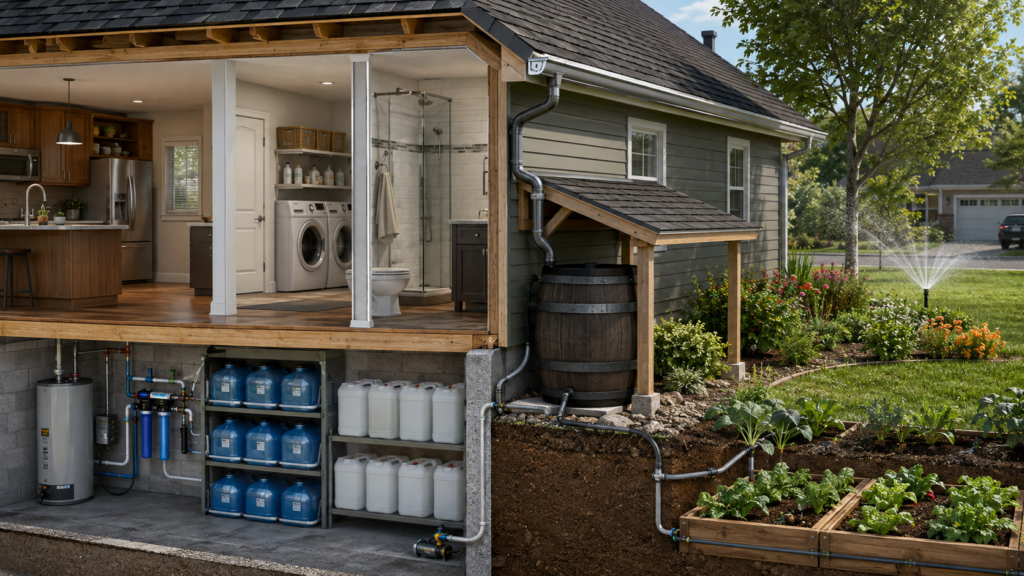
Rainwater harvesting can provide useful non-potable water in many locations, particularly for gardens and outdoor uses. The amount you can collect depends on roof area, rainfall, storage capacity, and local rules. Covered storage is important because system design affects both water quality and usable yield.
5. Understand That Collection and Drinking Water Are Different Things
Water that looks clear is not automatically safe to drink. Potential contaminants can be biological, chemical, or physical. If water may be consumed, use appropriate treatment methods and follow official public-health advice. A DIY collection system should never be presented as a substitute for safe-water standards.
6. Plan for Power Outages
If your water system relies on an electric pump, consider what happens during a blackout. Backup power, gravity-fed storage, or a separate emergency supply may reduce this vulnerability. The right solution depends on the property and local regulations
7. Build a Written Water Plan
Write down where emergency water is stored, what it may be used for, how you would obtain more, and which treatment methods you have available. Include household members, pets, and anyone with additional needs.
The Bigger Idea: Water Resilience Is About Options
The strongest preparedness plans do not rely on a single gadget. They create several ways to respond. Stored water handles the immediate problem. Conservation extends what you have. Collection can add another source for appropriate uses. Treatment knowledge helps you make safer decisions.
If your goal goes beyond storing a few containers and you are interested in a DIY system aimed at greater water self-reliance, a structured guide may help you organize the project instead of piecing together dozens of unrelated tutorials.
Curious about a DIY water-independence system? Review the Water Freedom System, what it teaches, and whether the approach makes sense for your home before buying.
Off-Grid Water at Home: What to Consider Before Building a DIY System
Some links in this post are affiliate links. If you buy through them, I may earn a small commission at no extra cost to you — it helps keep these guides free. I only point to things I’d genuinely consider using myself.
Search for “off-grid water system” and you will find everything from a rain barrel to elaborate tanks, pumps, filters, and treatment equipment. The problem is that copying somebody else’s setup without understanding your own needs can lead to wasted money—or a system that does not perform when you need it.
Before buying equipment, answer these questions.
How Much Water Do You Actually Need?
Separate drinking and cooking needs from toilets, cleaning, gardening, and other non-potable uses. This prevents you from designing every gallon of storage to the same standard and helps you estimate capacity more realistically.
What Source Will Refill the System?
Possibilities may include rainfall, a well, delivered water, or another legally permitted source. Rainwater systems are highly location-dependent: rainfall patterns, roof catchment area, seasonal dry periods, and tank size all influence performance.
Where Will the Water Be Stored?
Large quantities of water are heavy. Storage location, structural support, freezing conditions, sunlight, overflow routing, and access for maintenance matter. Bigger is not automatically better.
If you would rather follow a structured DIY framework than assemble a system from random videos, take a look at the Water Freedom System and compare its approach with your needs.
Will You Need a Pump?
Gravity can simplify some systems, while others need pumping. If a pump is essential, electricity becomes another dependency. Think about outages before you finalize the design.
How Will Water Quality Be Managed?
The intended use determines the treatment requirement. Garden water and drinking water are not the same. Screens, first-flush arrangements, sediment filtration and other components may help with collection systems, but potable use requires appropriate treatment and compliance with health guidance.
What Will Maintenance Look Like?
Any system that collects, stores, moves, or treats water needs inspection. Gutters get dirty, screens clog, tanks accumulate sediment, seals deteriorate, and filters require service. A system you cannot maintain easily may eventually become a system you stop using.
Should You DIY It?
DIY can make sense for people who enjoy hands-on projects and are willing to learn. But local building, plumbing, rainwater, well, and potable-water requirements still apply. For complicated installations, professional review can be worth the cost.
A good DIY guide should therefore do more than promise “free water.” It should help you think systematically about collection, storage, movement, use, maintenance, and limitations.
Ready to investigate the DIY route? See what the Water Freedom System covers, compare it with local requirements, and decide if it belongs in your preparedness plan.